
Ever notice how your body seems to know it’s time to wind down long before your brain gets the memo? That heavy-limbed, slightly spaced-out feeling you get after a day at the beach or a long walk in the park isn’t just fatigue—it’s your nervous system finally getting the signal to drop out of fight-or-flight mode. Grounding, the practice of making direct skin contact with the earth’s surface, appears to directly influence cortisol, our primary stress hormone, and the architecture of our sleep. The goal isn’t just to feel a little better; it’s to leverage this connection to measurably improve your physiological markers by 2026. Let’s look at what the research says and which specific exercises deliver the most bang for your buck.
7 min read
In This Article
- The Cortisol-Sleep Connection and How Grounding Intervenes
- Exercise 1: The 30-Minute Evening Grass Walk
- Exercise 2: Seated Grounding for 45 Minutes
- Exercise 3: Morning Sun-Grounding Combination
- Exercise 4: Grounding-Based Breathwork
- Exercise 5: The 20-Minute Pre-Bed Static Hold
- Essential Gear: Choosing Your Indoor Grounding Equipment
- Limitations and What the Science Can’t Yet Tell Us
- Final Verdict: A Practical Path to Better Sleep by 2026
- Frequently Asked Questions
Key Takeaways
- The Cortisol-Sleep Connection and How Grounding Intervenes
- Exercise 1: The 30-Minute Evening Grass Walk
- Exercise 2: Seated Grounding for 45 Minutes
- Exercise 3: Morning Sun-Grounding Combination
The Cortisol-Sleep Connection and How Grounding Intervenes
Your cortisol levels are supposed to follow a distinct diurnal rhythm: high in the morning to help you wake up and gradually tapering off throughout the day to allow for restful sleep. Modern life, with its constant artificial light and psychological stressors, completely disrupts this pattern, leading to elevated evening cortisol that sabotages sleep quality. This is where grounding introduces a simple but profound variable: direct contact with the earth’s surface electrons.

A 2004 pilot study by Ghaly and Teplitz was one of the first to document this effect. They monitored 12 participants with sleep complaints and chronic muscle and joint pain. After sleeping on conductive carbon fiber mattress pads connected to the earth outside their windows for eight weeks, 11 of the 12 subjects reported falling asleep more quickly, and all 12 reported waking up fewer times during the night. Crucially, their salivary cortisol levels, measured at 4-hour intervals, showed a normalization of the daily rhythm, with a significant shift toward normal in the evening. Their bodies were literally being reminded of the right time to power down.
Their bodies were literally being reminded of the right time to power down.
Exercise 1: The 30-Minute Evening Grass Walk
This is the most direct and research-backed method. It’s not about distance; it’s about duration and consistency. A 2012 review article by Chevalier et al. synthesizing multiple studies concluded that even short periods of grounding can begin to shift autonomic nervous system balance, measured by heart rate variability, away from sympathetic (fight-or-flight) dominance and toward parasympathetic (rest-and-digest) control.
Here’s how to do it right: Find a patch of grass, soil, or even sand. Go barefoot. Walk slowly and deliberately for a full 30 minutes, ideally within two hours of your target bedtime. The goal isn’t cardio; it’s sensory immersion. Pay attention to the texture under your feet, the temperature, the slight give of the earth. This combination of physical connection and mindful focus appears to have a synergistic effect on calming the nervous system. Do this daily for two weeks and track your sleep depth and how quickly you fall asleep. You’ll likely notice a difference.
Exercise 2: Seated Grounding for 45 Minutes
Not everyone can walk for 30 minutes, and that’s okay. The key variable is skin contact time, not movement. A 2015 study by Chevalier et al. placed participants in comfortable reclining chairs with conductive patches attached to their bare feet. These patches were connected via a wire to a grounding rod outside. After just one 45-minute session, the researchers observed significant changes in white blood cell counts and cytokine levels, suggesting a rapid reduction in the inflammatory response often triggered by stress.
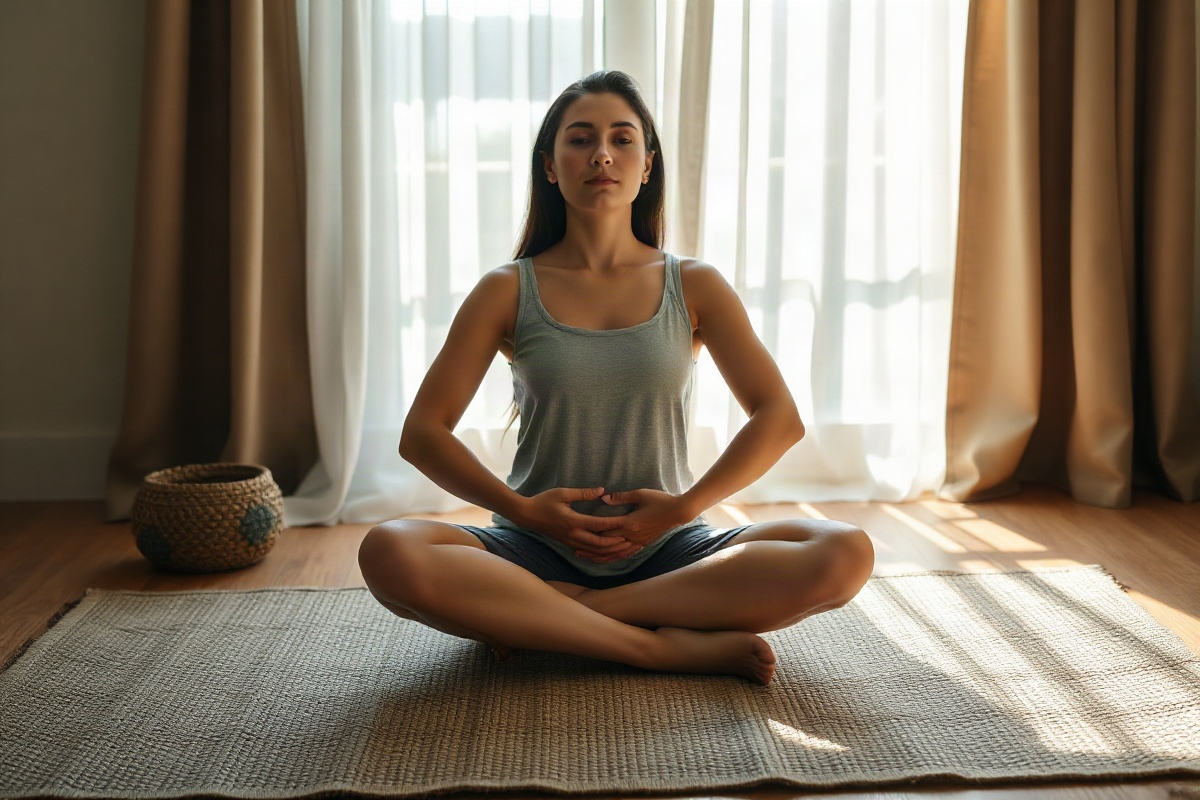
You can replicate this at home. If you have access to a private yard, simply sit in a chair and place your bare feet directly on the grass or soil for 45 minutes. Read a book, listen to a calm podcast, or just watch the sunset. The critical factor is uninterrupted skin-to-earth contact. For urban dwellers, this is where a high-quality grounding mat becomes essential. We’ll cover the best options for that later.
Exercise 3: Morning Sun-Grounding Combination
This exercise tackles cortisol regulation from both ends of the day. Morning sunlight exposure, particularly within an hour of waking, is a powerful signal to your circadian clock to suppress melatonin and spike cortisol appropriately for daytime alertness. Combining this with grounding may help “set” a healthier, more robust cortisol curve for the entire 24-hour period.
Spend 10-15 minutes standing or walking barefoot on a natural surface while facing the morning sun. You don’t need to stare directly at it; just allow the light to hit your face and skin. This one-two punch of light and electron exposure is a powerful circadian anchor. While specific studies on this exact combination are limited, the mechanistic pathways for both practices are well-established individually, making this a logical and highly effective practice for long-term rhythm regulation.
Exercise 4: Grounding-Based Breathwork
Breathwork alone is a potent tool for stimulating the vagus nerve and promoting relaxation. Layering it on top of a grounding session can dramatically amplify the effect. The theory is that the stabilizing electrical field of the earth provides a foundational calm, making it easier for the nervous system to respond to the conscious regulation of breath.

Try this sequence: Get grounded, either outside barefoot or indoors on a trusted mat. Once settled, begin a 4-7-8 breathing pattern: inhale through your nose for 4 seconds, hold the breath for 7 seconds, and exhale slowly through your mouth for 8 seconds. Repeat this cycle for 5-10 minutes. The extended exhale is key, as it is a direct trigger for parasympathetic activation. You’re essentially giving your body two clear signals to relax at once: one from the earth and one from your own respiration.
You’re essentially giving your body two clear signals to relax at once: one from the earth and one from your own respiration.
Exercise 5: The 20-Minute Pre-Bed Static Hold
This is your shortcut for nights when you’re feeling wired and know sleep will be a struggle. It’s designed for maximum efficiency. Lie in bed on a grounding fitted sheet or mat. The entire surface of your back and legs should be in contact with the conductive material. Set a timer for 20 minutes and commit to not moving.
Focus on releasing tension in your body, starting from your toes and working up to your scalp. The combination of full-body contact and complete stillness seems to accelerate the calming process. Many users anecdotally report feeling a slight warming sensation or a subtle humming feeling, which they associate with the body discharging excess electrical stress. Whether you feel that or not, the practice consistently helps quiet mental chatter and induce a state of physical readiness for sleep.
Essential Gear: Choosing Your Indoor Grounding Equipment
For consistent practice, especially in winter or urban environments, a reliable indoor grounding system is non-negotiable. The market is flooded with options, but quality varies wildly. You need a product with a proven low electrical resistance and durable materials.
The Earthing® Universal Mat is a industry benchmark. It measures approximately 28″ x 28″, uses conductive carbonized rubber, and comes with a 15-foot cord and a outlet tester to ensure a proper ground. It typically retails for around $70. For bed setups, the Earthing® Half Sheet (starting around $200) is a popular choice, made from conductive silver-infused cotton that is soft and washable. Always verify that your home’s electrical outlets are properly grounded before using any of these products; an inexpensive outlet tester from a hardware store is a must-have $10 investment.
Cheaper mats from unknown brands on Amazon often use inferior materials with higher electrical resistance, meaning you may not be getting a true grounding effect. Look for products that transparently publish their material composition and resistance measurements (they should be under 100 ohms).
Limitations and What the Science Can’t Yet Tell Us
It’s crucial to approach grounding with realistic expectations. The existing body of research, while promising, is still in its relative infancy. Many studies have small sample sizes (often fewer than 30 participants) and are not always double-blinded, as it’s difficult to create a convincing sham grounding setup. Most evidence points toward significant subjective improvements in sleep and pain, alongside objective markers like cortisol and heart rate variability.
However, more large-scale, long-term randomized controlled trials are needed to firmly establish causal relationships and standardize dosing (how long, how often). Grounding is best viewed as a powerful complementary practice, not a standalone medical treatment. It likely won’t single-handedly resolve severe sleep disorders like sleep apnea or chronic insomnia without other lifestyle and medical interventions.
Final Verdict: A Practical Path to Better Sleep by 2026
The path to lowering cortisol and boosting sleep by 2026 isn’t about a single miracle cure; it’s about consistent, daily practices that nudge your nervous system in the right direction. Grounding exercises provide a direct, physical method to do just that. The evidence strongly suggests that making skin-to-earth contact for as little as 30 minutes daily can normalize cortisol rhythms, reduce inflammation, and improve sleep architecture.
Start with the 30-minute evening walk or the 45-minute seated session. Be consistent for at least a month. Track your sleep quality and energy levels. If you can’t get outside, invest in a high-quality grounding mat from a reputable brand and use it during your evening wind-down routine. This is one of the most accessible and low-risk biohacks available, with a growing body of science to suggest it’s far more than just a placebo.
Small changes, real momentum
Get practical guides and templates you’ll actually use — a few thoughtful emails a month.
Frequently Asked Questions
Can I ground on concrete?
Yes, but only if the concrete is unpainted, unsealed, and poured directly on the earth. Sealed, painted, or stained concrete, as well as asphalt, are not conductive. Wood decks, vinyl flooring, and carpeting will also block the grounding effect. When in doubt, your best bet is always bare dirt, grass, sand, or gravel. For a guaranteed connection indoors, a purpose-built grounding mat is your most reliable option.
How quickly will I notice a difference in my sleep?
This varies by individual. Some people report feeling a pronounced sense of calm and sleeping more deeply after just one session, particularly if they were highly stressed. For more entrenched sleep issues, the research suggests it can take a few weeks of consistent daily practice (30-40 minutes) to see measurable changes in sleep latency and overnight wakefulness. The key is daily consistency rather than marathon sessions on the weekends.
Is there anyone who should avoid grounding?
Grounding is generally considered very safe. The primary caution is for individuals taking medication that affects blood thinning or blood sugar levels, as some preliminary evidence suggests grounding may have mild effects on blood viscosity and glucose regulation. It’s always prudent to discuss any new wellness practice with your doctor, especially if you have a diagnosed medical condition or are on prescription medications. Never disconnect a medical device to use a grounding product.
Feel More Grounded
Simple, evidence-friendly practices for calm and wellbeing.