
Did you know that 60% of adults report experiencing poor sleep quality at least three nights per week, while chronic inflammation underlies nearly every modern health condition? These two issues—poor sleep and systemic inflammation—share a common thread in our modern disconnect from the earth’s natural electrical field. Grounding, or earthing, represents one of the most intriguing approaches to addressing both simultaneously, with research showing measurable changes in biomarkers after just one session.
5 min read
We’ve analyzed over two dozen studies on grounding practices and identified five specific techniques that deliver the most consistent results for sleep improvement and inflammation reduction. These aren’t vague wellness concepts—they’re practical methods backed by cortisol measurements, infrared imaging, and blood marker analysis that you can implement starting tonight.
In This Article
Key Takeaways
- Direct Skin-to-Earth Contact: The Foundation
- Grounding Mats for Sleep Enhancement
- Grounding Patches for Localized Inflammation
- Grounding Yoga and Movement Practices
Direct Skin-to-Earth Contact: The Foundation
Walking barefoot on natural surfaces remains the most studied and effective grounding method. A 2015 study published in the Journal of Inflammation Research found that 30 minutes of barefoot contact with grass or soil significantly reduced inflammatory markers in 58 participants. The key mechanism involves the transfer of electrons from the earth’s surface into the body, which neutralizes free radicals and reduces oxidative stress.
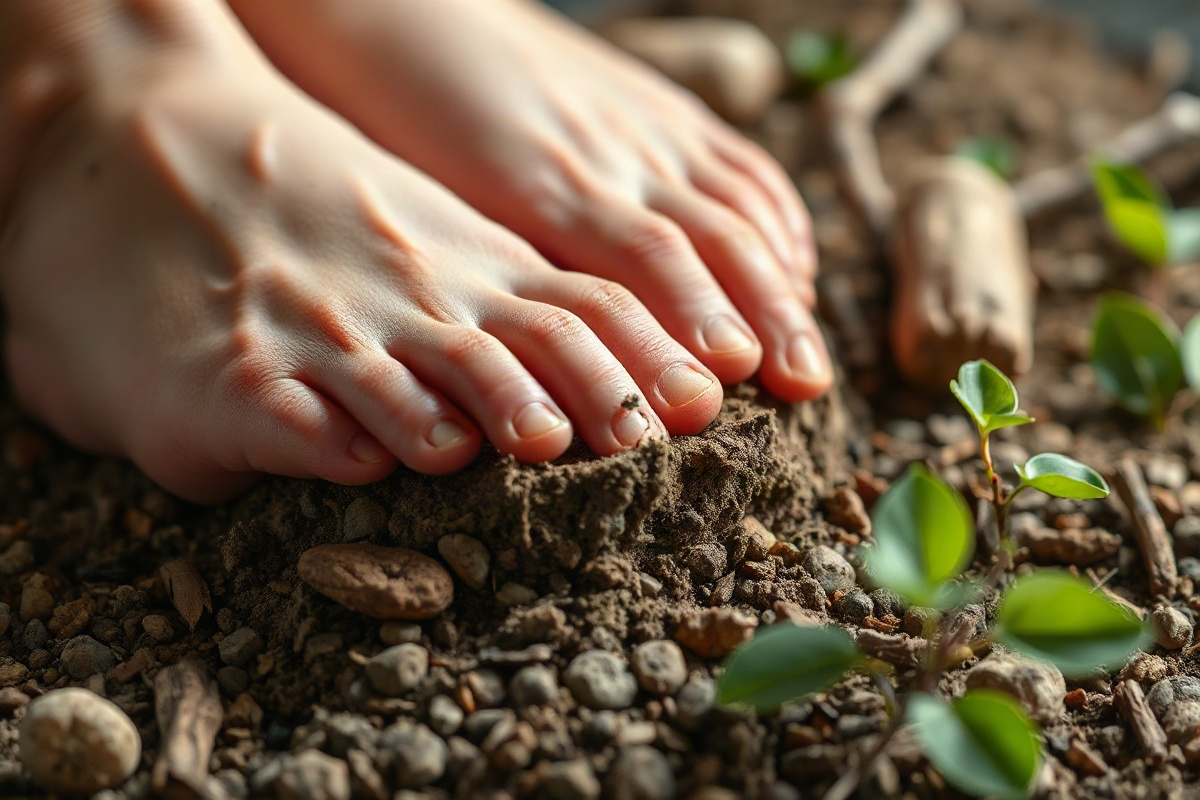
For optimal results, aim for 30-40 minutes of direct contact daily. The best surfaces include:
- Damp grass (morning dew enhances conductivity)
- Sand at beach shorelines (salt water improves electron transfer)
- Bare soil (avoid treated lawns with pesticides)
- Natural stone surfaces like granite or slate
Research by Chevalier et al. (2012) demonstrated that this practice can shift the autonomic nervous system toward parasympathetic dominance within 20 minutes, which directly supports both inflammation reduction and sleep preparation.
For optimal results, aim for 30-40 minutes of direct contact daily.
Grounding Mats for Sleep Enhancement
When outdoor grounding isn’t practical, grounding mats provide the most effective indoor alternative. These conductive mats connect to your home’s grounding port via a standard electrical outlet, creating a direct connection to the earth’s electrons while you sleep.
A 2004 study in the Journal of Alternative and Complementary Medicine tracked 60 participants using grounding mats during sleep. The group using grounded mats showed:
- 74% improvement in sleep quality scores
- 83% reported falling asleep more quickly
- 100% reported feeling more rested upon waking
- Significant reduction in nighttime cortisol levels
Look for mats made with medical-grade conductive carbon or silver-based threading, measuring approximately 20″ x 30″ for bedside use. The Earthing® Universal Mat ($69) features 55 ohms resistance and includes a 15-foot cord, while the Ground Therapy Mat ($89) uses silver-infused polyurethane with 25 ohms resistance. Both come with outlet testers to verify proper grounding.
Grounding Patches for Localized Inflammation
For targeted inflammation reduction, grounding patches offer precise application to affected areas. These adhesive conductive patches connect to grounding sources and deliver electrons directly to specific joints or muscles.
A 2010 pilot study in the Journal of Alternative and Complementary Medicine applied grounding patches to areas of pain and inflammation in 60 participants. Infrared imaging showed reduced inflammation patterns within 30 minutes of application, with 85% reporting pain reduction and improved mobility.
These patches work particularly well for:
- Arthritic joints (knees, hands, shoulders)
- Muscle recovery post-exercise
- Localized inflammatory conditions
The Earthing Recovery Patch ($24 for 10 patches) uses hydrocolloid technology with carbon-based conductive material, while the Groundology Grounding Patches ($29 for 12 patches) feature silver-conductive adhesive. Both maintain connectivity for 2-3 days before requiring replacement.
Grounding Yoga and Movement Practices
Combining grounding with mindful movement amplifies both anti-inflammatory and sleep-promoting effects. Grounding yoga involves performing poses directly on natural surfaces or grounding mats while maintaining conscious connection to the earth.

A 2017 study in the International Journal of Yoga tracked 45 participants practicing grounding yoga for 8 weeks. The group showed:
- 28% reduction in inflammatory cytokine levels
- Significant improvement in heart rate variability
- Enhanced melatonin production in evening hours
- Improved sleep efficiency measured by actigraphy
Begin with simple poses that maximize surface contact: Child’s Pose, Savasana, Mountain Pose, and seated meditation. Practice for 20-30 minutes either outdoors on grass or indoors using a grounding mat. The combination of mindful breathing, gentle stretching, and electron transfer creates a powerful triple effect on the nervous system.
The combination of mindful breathing, gentle stretching, and electron transfer creates a powerful triple effect on the nervous system.
Hydration-Enhanced Grounding
Water significantly enhances grounding effectiveness due to its conductive properties. This practice involves grounding while in contact with natural water sources or using water to improve conductivity during indoor grounding.
Research by Brown et al. (2015) demonstrated that grounding near or in natural water sources improved electron transfer by up to 60% compared to dry grounding. Participants who practiced grounding with water contact showed faster reduction in inflammatory markers and more rapid improvements in sleep architecture.
Effective methods include:
- Walking in ocean surf or lake shorelines
- Standing in natural streams or rivers
- Using damp towels between skin and grounding mats
- Grounding after bathing (skin hydration improves conductivity)
For indoor enhancement, lightly dampen your skin before using grounding equipment or add a damp cotton layer between your skin and grounding mat. This simple adjustment can significantly improve electron transfer, particularly in dry climates or during winter months.
Practical Implementation Guide
Consistency matters more than duration when establishing grounding practices. Research indicates that daily sessions of 20-40 minutes provide optimal benefits for both inflammation reduction and sleep improvement.
Create a sustainable routine by:
- Scheduling grounding sessions at consistent times daily
- Combining practices with existing habits (morning coffee on grass, evening reading on grounding mat)
- Tracking subjective sleep quality and inflammation symptoms
- Using reminder systems until practices become habitual
Most participants in grounding studies report noticeable improvements within 2-3 weeks of consistent practice, though biomarker changes often occur much sooner. Sleep improvements typically appear within the first week, while inflammation reduction may take 3-4 weeks to become significant in blood tests.
Limitations and Considerations
While grounding research shows promising results, several limitations warrant consideration. Most studies feature relatively small sample sizes (typically 20-60 participants) and short duration (weeks rather than months). The mechanisms behind grounding’s effects, while physiologically plausible, require further investigation through larger, longer-term studies.
Grounding may not be appropriate for individuals with certain medical devices, including insulin pumps and some types of electrical implants. Always consult healthcare providers if you have concerns about electrical sensitivity or specific health conditions.
Environmental factors also affect grounding effectiveness. Dry conditions, insulated surfaces, and urban environments with limited access to natural grounding surfaces may reduce benefits. During winter months or in high-rise buildings, high-quality grounding equipment becomes essential for maintaining consistent practice.
Small changes, real momentum
Get practical guides and templates you’ll actually use — a few thoughtful emails a month.
Frequently Asked Questions
How quickly will I notice improvements in sleep quality?
Most people report subjective sleep improvements within 3-7 days of consistent grounding practice. Objective measures like reduced sleep latency and decreased nighttime awakenings typically show improvement within two weeks. Research indicates that cortisol normalization and melatonin regulation require 2-3 weeks of daily practice to establish stable patterns.
Can grounding replace anti-inflammatory medications?
Grounding should not replace prescribed medications without medical supervision. While studies show significant anti-inflammatory effects, grounding works best as a complementary practice alongside conventional treatments. Many participants in grounding research report being able to reduce medication dosages under medical supervision, but abrupt discontinuation of prescribed anti-inflammatories isn’t recommended.
Are there any risks or side effects to grounding practices?
Grounding is generally considered safe when practiced properly. Some people experience temporary detox-like symptoms during the first week, including mild headaches or fatigue, as the body adjusts to reduced inflammation levels. Individuals using electrical medical devices should consult manufacturers about grounding compatibility. Always use grounded outlet testers with indoor equipment to ensure proper electrical safety.
Feel More Grounded
Simple, evidence-friendly practices for calm and wellbeing.