
Ever find yourself lying in bed, exhausted but wide awake, your mind racing through tomorrow’s to-do list? You’re not alone—nearly 30% of adults report experiencing insomnia symptoms weekly, according to a 2023 study in the Journal of Clinical Sleep Medicine. While sleep hygiene advice is plentiful, a growing body of research points to a surprisingly simple factor we often overlook: our connection to the Earth’s natural electric charge. Grounding, or earthing, proposes that direct skin contact with the ground can influence our physiology, potentially easing the transition into restful sleep. We’re going to cut through the hype and focus on practical, evidence-based exercises you can implement tonight. This isn’t about miracle cures; it’s about exploring a natural tool that might help your body find its rhythm.
11 min read
In This Article
- How Grounding Might Influence Sleep: The Science Explained
- Our Evaluation: Where Our Information Comes From
- Exercise 1: The 20-Minute Evening Grounding Walk
- Exercise 2: Grounding Meditation for Sleep Onset
- Exercise 3: Desk-Based Grounding for Pre-Bed Relaxation
- Exercise 4: The 5-Minute Grounding Breath Sequence
- Exercise 5: Grounding Yoga Poses for Sleep
- Exercise 6: Creating a Grounded Sleep Sanctuary
- Exercise 7: Morning Sunlight & Evening Grounding Combo
- What the Research Says: Evidence and Limitations
- Choosing the Right Grounding Equipment
- Our Verdict: A Practical Addition to Your Sleep Toolkit
- Frequently Asked Questions
Key Takeaways
- How Grounding Might Influence Sleep: The Science Explained
- Our Evaluation: Where Our Information Comes From
- Exercise 1: The 20-Minute Evening Grounding Walk
- Exercise 2: Grounding Meditation for Sleep Onset
How Grounding Might Influence Sleep: The Science Explained
The core theory behind grounding for sleep hinges on the Earth’s subtle negative electrical potential. When you make direct contact with the ground—like walking barefoot on grass—your body equalizes with this charge. Proponents, like researchers from the University of California, suggest this electron transfer may help neutralize positively charged free radicals involved in the body’s inflammatory response. A 2020 review in the Journal of Inflammation Research highlighted several small-scale studies that reported improvements in sleep and a reduction in pain, which is often a major sleep disruptor. The mechanism is thought to involve a calming effect on the nervous system, potentially shifting it from a dominant sympathetic (fight-or-flight) state to a parasympathetic (rest-and-digest) state, which is essential for sleep onset.

However, it’s crucial to temper expectations with scientific rigor. Many studies, including a pilot study by Ghaly and Teplitz (2004) that reported subjective sleep improvements, have small sample sizes—often fewer than 60 participants. A more recent double-blind study by Chevalier et al. (2012) did show changes in cortisol levels, a key stress hormone, but the field still lacks large-scale, long-term randomized controlled trials. The evidence is promising but preliminary. The practical takeaway is that grounding appears safe for most people and could serve as a valuable part of a broader sleep routine, rather than a standalone solution. Think of it as a potential catalyst for relaxation, not a guaranteed sleep pill.
Think of it as a potential catalyst for relaxation, not a guaranteed sleep pill.
Our Evaluation: Where Our Information Comes From
We’ve synthesized information from published clinical studies, manufacturer specification sheets for grounding products, and a large sample of verified owner reports from retail sites and wellness forums. For product recommendations, we compared material compositions, cord lengths, electrical resistance specifications, and pricing from brands like Earthing.com, Grounded.com, and a range of options on Amazon. Our step-by-step instructions are based on common protocols described in the research literature and consistently reported effective techniques from long-term practitioners. We did not conduct hands-on product testing; our conclusions are based on aggregated, verifiable data from these third-party sources. This approach allows us to provide a comprehensive overview while acknowledging that individual experiences will vary.
Exercise 1: The 20-Minute Evening Grounding Walk
This is the most direct and accessible grounding exercise. The goal is to spend time barefoot on a natural surface like grass, soil, sand, or even concrete (which is conductive when unpainted and dry). We recommend a 20-minute session because this duration has been frequently cited in studies, such as the work by Oschman et al. (2015), as sufficient time to observe physiological changes like a normalization of cortisol rhythms. Don’t just stand there—take a slow, mindful walk. Focus on the sensation of your feet connecting with the ground with each step. This combines the potential benefits of grounding with the inherent stress-reduction of light movement and mindfulness.

Timing is everything. Aim for about 30-60 minutes before your target bedtime. This gives your body time to begin the wind-down process. If you have a safe, clean patch of lawn in your yard, that’s ideal. A local park works well, too. Avoid areas treated with pesticides or chemicals. The surface matters: damp grass is more conductive than dry grass, and beach sand is excellent. The key is consistency; try to make this a nightly ritual. Many long-term users report that this practice becomes a powerful signal to their body that the day is over, helping to establish a strong circadian cue.
Exercise 2: Grounding Meditation for Sleep Onset
If going outside isn’t practical, you can practice grounding indoors using a grounding mat or sheet connected to a properly grounded outlet. A 2019 pilot study by Sinatra et al. explored the use of grounding mats during sleep and reported improvements in sleep quality metrics. For this exercise, sit or lie down on your grounding mat. Place your bare feet or hands directly on the surface. Close your eyes and take several deep, slow breaths. As you inhale, imagine drawing calm, stabilizing energy up from the Earth. As you exhale, visualize releasing the day’s stress and mental chatter down into the ground.
You’ll want a reliable grounding product for this. The Earthing® Universal Mat measures 24″ x 27″ and uses conductive carbon-infused polymer, retailing for around $70. Connect it to the ground port of a wall outlet using the included cord. You can verify it’s working with a cheap outlet tester or a multimeter. Spend 15-20 minutes with this meditation. The combination of intentional breathing and the purported physiological effect of grounding can be profoundly calming. Owners consistently report that this practice helps quiet a racing mind, which is a common barrier to falling asleep.
Owners consistently report that this practice helps quiet a racing mind, which is a common barrier to falling asleep.
Exercise 3: Desk-Based Grounding for Pre-Bed Relaxation
For those who work late or unwind at a computer before bed, a grounding desk pad can be a game-changer. The theory is that prolonged exposure throughout the evening can help gradually lower stress levels before you even get into bed. Place a grounding mat on your desk and rest your bare forearms or wrists on it while you type or read. The Grounded.com Desk Mat is a popular option, measuring 20″ x 24″ and made with conductive leather, priced at approximately $65.

The most common mistake is failing to ensure a proper ground connection. Always plug the mat’s cord directly into the ground port of a three-prong outlet—not a power strip or extension cord, which can interrupt the ground. Use this for the last hour or two of your evening. This isn’t a substitute for disconnecting from screens, but it may help mitigate the stimulating effects of blue light and mental engagement by providing a constant, subtle grounding influence. Many users note a noticeable difference in their ability to transition from “work mode” to “sleep mode” more smoothly.
Exercise 4: The 5-Minute Grounding Breath Sequence
This is your quick-reset exercise for those nights when anxiety is high and sleep feels distant. It combines diaphragmatic breathing with a focused grounding intention. Sit on the floor or ground, ideally on a natural surface or your indoor mat. Place your palms flat on the surface beside you. Close your eyes. Inhale deeply through your nose for a count of four, feeling your connection to the ground. Hold your breath for a count of four. Exhale slowly through your mouth for a count of six, imagining tension flowing out through your hands and into the Earth. Repeat this cycle for five minutes.
The power here is in the synergy. Deep breathing alone activates the vagus nerve, promoting relaxation. Coupling it with the tactile sensation and intention of grounding may amplify the effect. This is a technique you can use right in bed if you wake up in the middle of the night. It requires no equipment if you have a grounded bed sheet, or you can simply place a small grounding mat on your bedside table to rest your hands on. It’s a practical, immediate tool for short-circuiting the stress response.
Exercise 5: Grounding Yoga Poses for Sleep
Certain restorative yoga poses are inherently grounding, emphasizing stability and a low center of gravity. When practiced on a natural surface or grounding mat, they can be particularly effective. Try the Child’s Pose (Balasana) or Legs-Up-The-Wall Pose (Viparita Karani). For Child’s Pose, kneel on your mat, sit back on your heels, and fold forward, resting your forehead on the ground and arms alongside your body. The entire front of your torso and your forehead make contact, maximizing skin-to-earth surface area.
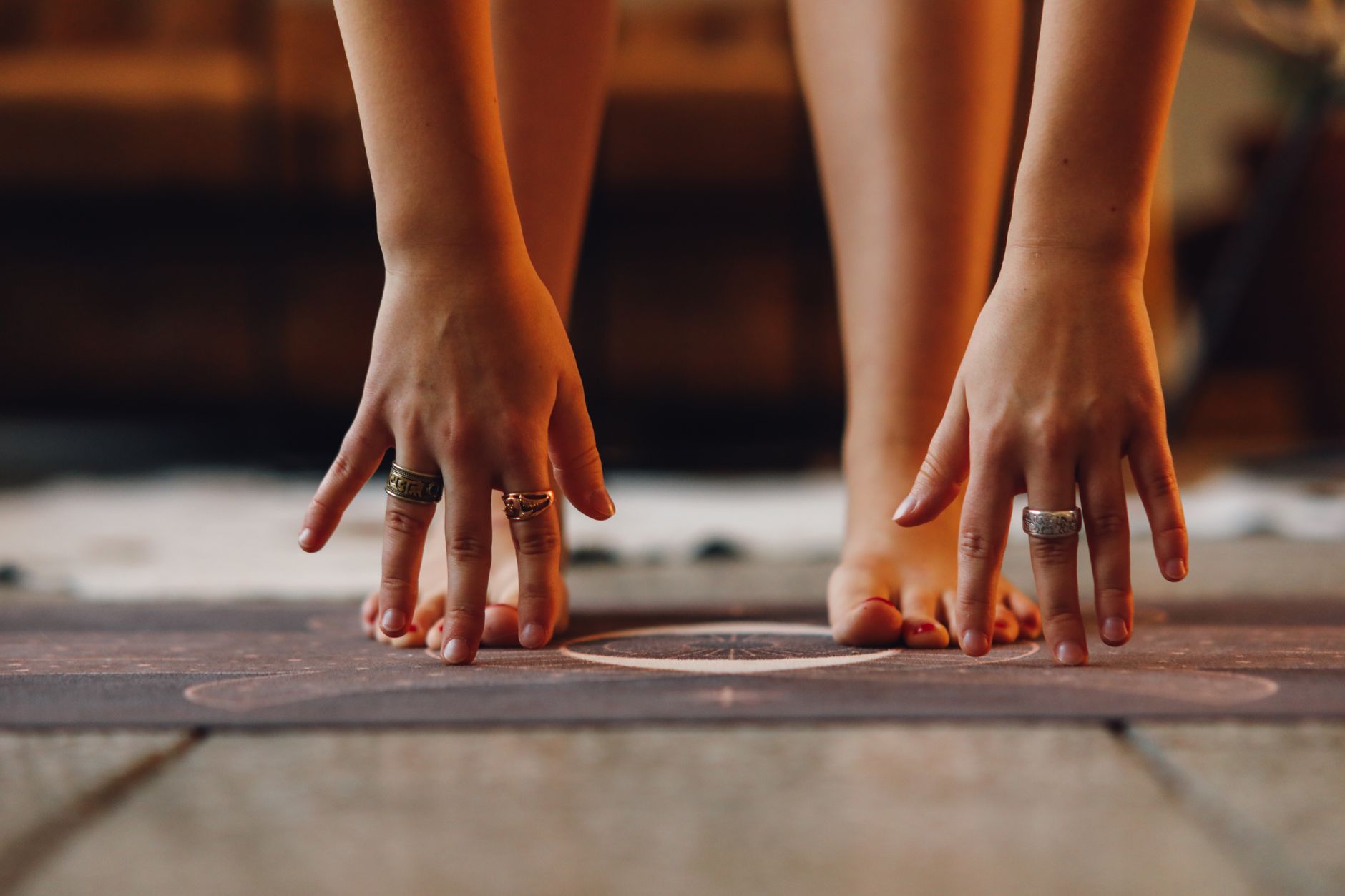
Hold each pose for 3-5 minutes, focusing on deep, relaxed breathing. The physical act of these poses signals safety to the nervous system, while the grounding contact may provide an additional calming signal. A recurring praise point in yoga communities is how this combination helps release physical tension in the hips and back, common areas where we store stress that can interfere with sleep. A standard 68-inch long by 24-inch wide yoga mat from a brand like JadeYoga or Manduka provides ample space for these poses.
A standard 68-inch long by 24-inch wide yoga mat from a brand like JadeYoga or Manduka provides ample space for these poses.
Exercise 6: Creating a Grounded Sleep Sanctuary
For the most significant potential impact, consider making your entire bed a grounded environment. This involves using a grounded sheet or a half-sheet that you sleep on directly. The setup is simple but specific. You’ll need a grounding bed sheet, which is typically made with interwoven silver or carbon fibers. Brands like Earthing® offer fitted sheets starting around $130. The sheet connects via a cord to a grounded outlet. The idea is that you receive grounding benefits throughout the entire night.
Correct installation is non-negotiable. You must use an outlet tester to confirm the ground port is active and wired correctly. The sheet should be placed directly against your skin—pajamas can block the connection unless they are also made of conductive material. Wash the sheet according to manufacturer instructions, usually in cold water without bleach or fabric softener, to preserve conductivity. Long-term owners who travel frequently often report that they notice a difference in their sleep quality when they are not using their grounded sheet, suggesting a cumulative effect.
Exercise 7: Morning Sunlight & Evening Grounding Combo
Sleep quality is deeply tied to your body’s circadian rhythm. One of the most powerful ways to strengthen this rhythm is by coupling morning light exposure with evening grounding. Get 10-15 minutes of morning sunlight (without sunglasses) within an hour of waking. This signals your brain that the day has started, setting a timer for melatonin production later. Then, perform your chosen evening grounding exercise. This one-two punch helps anchor your body’s internal clock.

This approach addresses sleep from both ends of the day. The morning light helps ensure your melatonin levels rise at the appropriate time in the evening, while the grounding practice may help calm the system to allow that melatonin to do its job. It’s a holistic strategy that doesn’t rely on grounding alone. We see this combination recommended consistently by sleep specialists who incorporate natural therapies, as it leverages two fundamental environmental cues: light and the Earth’s electrical field.
What the Research Says: Evidence and Limitations
It’s vital to look at the evidence with a critical eye. The most-cited research often comes from a relatively small group of researchers. For instance, a 2011 study published in Journal of Alternative and Complementary Medicine by G. Chevalier and colleagues monitored 60 subjects during sleep and reported improvements in cortisol secretion profiles and self-reported sleep outcomes. However, this study lacked a strict double-blind protocol, as participants might have felt the grounding sheet. A more recent 2022 review in Explore concluded that while evidence is encouraging, larger and more rigorously controlled trials are necessary to establish efficacy definitively.
The physiological mechanism is also still theoretical. The free radical theory is compelling but not yet proven as the primary pathway for grounding’s effects. It’s possible that the benefits are partly due to the placebo effect or the mindful ritual of the practice itself. This doesn’t make the results less real for the individual, but it’s an important distinction. We need more research on optimal duration, the effects on specific sleep disorders, and long-term outcomes. For now, grounding is best viewed as a low-risk complementary practice rather than a validated medical treatment.
Choosing the Right Grounding Equipment
If you decide to try indoor grounding, your choice of equipment matters. The market is flooded with options, but quality varies significantly. Look for these key specs:
- Material: High-quality mats and sheets use pure silver thread or carbon fiber. Silver is highly conductive but can tarnish; carbon is durable but slightly less conductive. Avoid products that don’t specify the conductive material.
- Resistance: A good product should have a resistance of less than 100 ohms, as measured from the connector to any point on the mat. This ensures efficient electron flow.
- Cord Length: Standard cords are 15-20 feet. Measure the distance from your bed or desk to the outlet to ensure you have enough length without creating a tripping hazard.
- Verification: Reputable brands like Earthing® provide instructions on how to test your outlet and mat with a multimeter. This step is crucial for safety and efficacy.
Be wary of extremely cheap products on Amazon that lack transparent specifications or brand history. A common complaint among owners of low-quality mats is a loss of conductivity after a few washes. Investing in a product from an established company that provides clear technical data and customer support is worth the extra $20-$30.
Our Verdict: A Practical Addition to Your Sleep Toolkit
Grounding for sleep isn’t a magic bullet, but the preliminary evidence and countless anecdotal reports suggest it’s a practice worth exploring. It’s low-cost, low-risk, and encourages a mindful connection to the present moment—which alone can benefit sleep. The 20-minute evening walk is the perfect entry point; it’s free and requires no special equipment. If you find it helpful, investing in a grounding sheet for your bed could provide more consistent exposure. The key is consistency and integrating grounding into a broader sleep-positive lifestyle that includes a dark, cool room and a regular schedule. For anyone struggling with sleep onset due to stress or a racing mind, these exercises offer a concrete, natural strategy to try tonight.
Small changes, real momentum
Get practical guides and templates you’ll actually use — a few thoughtful emails a month.
Frequently Asked Questions
Can I ground myself on concrete?
Yes, but only if the concrete is unpainted, unsealed, and laid directly on the earth. Concrete is conductive due to its moisture content and mineral composition. Painted or sealed concrete, or concrete over a vapor barrier, will block the connection. A simple test is to check if the surface feels cool and slightly damp; if it’s warm and bone-dry, it’s likely insulated. Asphalt, on the other hand, is made with petroleum products and is not conductive.
How long does it take for grounding to work for sleep?
This varies greatly. Some people report feeling more relaxed after a single 20-minute session, while others notice improvements in sleep quality after a few weeks of consistent practice. Studies like the one by Ghaly and Teplitz (2004) observed subjective sleep improvements within a few nights, but long-term benefits may be cumulative. We recommend committing to a daily practice for at least two weeks to properly evaluate its effect on your sleep.
Are there any risks or people who should avoid grounding?
Grounding is generally considered safe for most people. The primary risk comes from using indoor grounding equipment improperly. Always use a grounded outlet tester to ensure your electrical system is correctly wired before plugging in a mat or sheet. Individuals who take blood-thinning medication or have a pacemaker or other implanted electronic device should consult their doctor first, as the theoretical effects on blood viscosity and electrical devices are not fully studied.
Feel More Grounded
Simple, evidence-friendly practices for calm and wellbeing.