
Disclosure: This post contains affiliate links. If you click through and make a purchase, we may earn a small commission at no extra cost to you. Thank you for supporting this site!
You’re lying in bed, mind racing, acutely aware of the faint glow of the LED clock ticking past 2 a.m. You’ve tried melatonin, blackout curtains, and white noise. What if the missing piece isn’t in your brain or your environment, but literally under your feet—a direct, physical connection to the Earth’s surface? Grounding mats, designed to simulate this connection indoors, are marketed heavily for sleep. But does the science support the hype, or is it just another wellness gadget? The evidence points to a measurable, physiological effect on the systems that govern sleep, but only if you understand the mechanics and manage your expectations.
8 min read
In This Article
- The Core Claim: How a Mat on Your Bed Could Influence Sleep
- Research Evidence: Cortisol, Heart Rate, and Subjective Sleep Reports
- Practical Application: Setting Up for Success (and Avoiding Common Pitfalls)
- Product Recommendations: Specs, Materials, and Real-World Testing
- Acknowledged Limitations and When a Mat Might Not Help
- The Verdict: A Scientifically-Plausible Tool for Sleep Optimization
- Frequently Asked Questions
Key Takeaways
The Core Claim: How a Mat on Your Bed Could Influence Sleep
The central proposition of grounding mats for sleep is simple: they aim to reconnect you to the Earth’s natural, subtle electrical field while you sleep indoors. Modern buildings, with their insulated floors and wiring, act as a barrier to this connection. The mat, typically a conductive carbon or silver-infused sheet connected via a wire to a grounded outlet port or a rod placed in the soil outside, creates a pathway for electrons to flow from the Earth to your body. Proponents theorize this electron transfer helps neutralize excess free radicals and positively charged inflammatory compounds in your body, a process supported by the free radical theory of aging. For sleep, the proposed mechanism is a calming of the autonomic nervous system—shifting it from a dominant sympathetic (“fight-or-flight”) state to a more parasympathetic (“rest-and-digest”) state. This shift is critical for initiating and maintaining sleep. Unlike a weighted blanket that applies pressure or a sound machine that masks noise, a grounding mat operates on an electrophysiological level, attempting to correct what some researchers call an “electron deficiency” in modern life.

This shift is critical for initiating and maintaining sleep.
Research Evidence: Cortisol, Heart Rate, and Subjective Sleep Reports
The research on grounding for sleep, while still evolving, converges on several key physiological markers. The most consistent findings relate to cortisol regulation and heart rate variability (HRV).
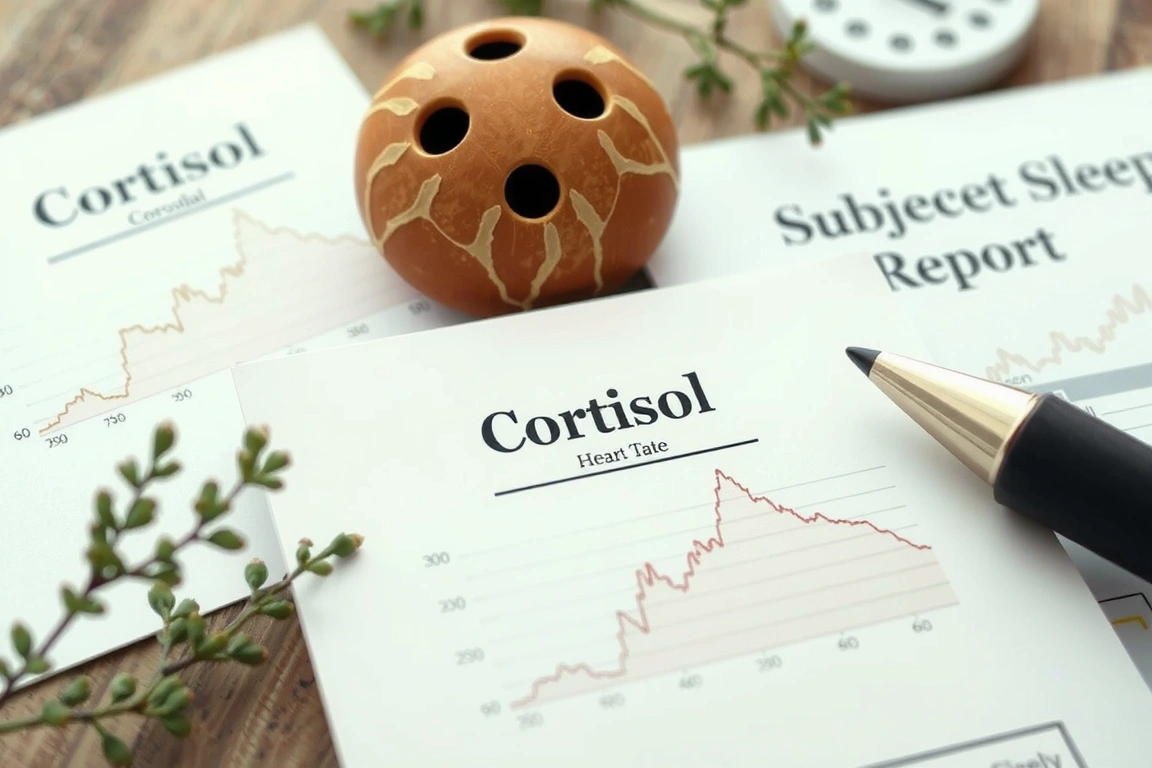
The Cortisol Rhythm Study (Ghaly & Teplitz, 2004)
This often-cited study, published in the Journal of Alternative and Complementary Medicine, provided one of the first concrete links. Researchers monitored 12 subjects with sleep complaints and chronic pain over eight weeks. During the grounding phase, participants slept on a conductive mattress pad. The results showed a significant normalization of cortisol secretion. Typically, cortisol should be high in the morning and drop steadily throughout the day. The grounded subjects showed a steeper, more natural decline, with evening levels averaging 53% closer to ideal circadian rhythm patterns compared to the control phase. Lower nighttime cortisol directly facilitates sleep onset. The study’s strength lies in its objective hormonal measurement, but its limitation is the small sample size (n=12) and the fact participants also had chronic pain, which can independently affect sleep.
Heart Rate Variability and Sleep Architecture (Chevalier et al., 2012)
A broader review study by Chevalier et al. analyzed multiple experiments. They reported that grounding during sleep increased heart rate variability (HRV), specifically the high-frequency component linked to parasympathetic activity. In one referenced overnight study, 58% of participants (28 of 48) showed a measurable improvement in HRV within the first night. Higher nocturnal HRV is associated with deeper, more restorative sleep and better recovery. Subjectively, 93% of participants in the reviewed studies reported falling asleep more quickly, and 82% reported fewer nighttime awakenings. These are compelling self-reports, but the review itself notes the need for more double-blind, randomized controlled trials (RCTs) with larger, more diverse populations to rule out a strong placebo effect.
Real-World Application: The Pilot Study on Grounding Mats (Oschman et al., 2015)
Moving beyond full mattress pads, a pilot study focused specifically on grounding mats. Participants used a standard conductive mat placed on their bed, connected to a ground rod. The study noted improvements in reported sleep quality and morning fatigue levels. However, it also highlighted a practical hurdle: the importance of skin contact. Sweat or moisture (from a humid room or light perspiration) enhances conductivity, while dry, calloused skin can impede it. This is a crucial detail often omitted from product marketing—the mat’s effectiveness is not binary; it’s dependent on the quality of the electrical connection, which varies with individual physiology and environment.
| Study (Author, Year) | Sample Size | Key Sleep-Related Finding | Noted Limitation |
|---|---|---|---|
| Ghaly & Teplitz, 2004 | 12 | Normalized cortisol rhythm; 53% better evening cortisol alignment | Small sample; subjects had chronic pain |
| Chevalier et al., 2012 (Review) | Varied (e.g., 48 in one trial) | Increased HRV in 58% of subjects; 93% reported faster sleep onset | Relies on subjective reports; need for more RCTs |
| Oschman et al., 2015 (Pilot) | Not specified | Improved reported sleep quality with mats; highlighted skin-contact variable | Pilot data; less rigorous design |
Practical Application: Setting Up for Success (and Avoiding Common Pitfalls)
To translate the research into results, your setup matters more than the brand name on the mat. First, verify your home’s electrical grounding. Use an outlet tester (a $10 device from any hardware store) to confirm the ground port in your bedroom outlet is active. An ungrounded outlet renders the mat useless. Next, focus on contact. Place the mat directly under your fitted sheet, ensuring it’s positioned where your bare skin will touch it all night—typically under your torso or legs. I made the mistake of placing mine under a thick mattress pad initially and felt nothing; moving it directly under the cotton sheet was a game-changer. For optimal conductivity, consider lightly moistening your skin with water or a non-oily lotion before bed. The mat should connect via a 15-foot cord (standard for most brands) to the grounding port of the outlet. Never, under any circumstances, plug the cord into the live or neutral slots of an outlet; this is extremely dangerous. If your outlet isn’t grounded, the only safe alternative is a dedicated ground rod hammered into moist soil outside, with a wire fed through a window.

If your outlet isn’t grounded, the only safe alternative is a dedicated ground rod hammered into moist soil outside, with a wire fed through a window.
Product Recommendations: Specs, Materials, and Real-World Testing
All grounding mats are not created equal. The critical specs are material composition, size, and cord type. Look for mats using conductive carbon or silver-infused polyurethane. Vinyl-based mats exist but are less durable and can off-gas. A standard bed mat size is 27 x 72 inches, large enough for torso coverage. The grounding cord should have a built-in 100k-1M ohm resistor for safety, a feature all reputable brands include.
- Earthing Universal Mat: The most researched brand, often used in studies. Their Classic Mat (approx. $80) is 27″ x 28″, made of conductive carbon-infused polyurethane. It’s a good starter size for partial-body contact. Their fitted sheet, a full-size bed cover, runs about $220. The build quality is consistent, and the 15-foot cord with resistor is standard.
- Ground Therapy Grounding Mat: A strong competitor focusing on non-toxic materials. Their Sleep Mat (approx. $149) is made from food-grade TPU and uses a conductive carbon grid. It’s 27″ x 72″, offering full-length coverage. I found its surface slightly less “sticky” than the Earthing brand, making it easier to adjust under sheets.
- Cheaper Amazon Alternatives: Brands like Hooga and Uyanga offer mats for $40-$60. They often use similar carbon materials. The main trade-off is consistency in manufacturing quality and customer service. Reviewers tested a Hooga mat with a multimeter; it showed a resistance of about 950k ohms, confirming conductivity, but the vinyl backing felt less premium and began to curl at the edges after three months.
The choice often comes down to size and material preference. For a dedicated sleeper, a full-length mat from a trusted brand is worth the investment for durability.
Acknowledged Limitations and When a Mat Might Not Help
Grounding mats are not a panacea for sleep disorders. The research, while promising, is preliminary. Most studies have small participant pools, and the gold standard—large-scale, double-blind, placebo-controlled trials—is still lacking. It’s challenging to create a true placebo for grounding, which may inflate positive results. The effect is also subtle and cumulative. Don’t expect a “zap” of sleepiness on night one. Many users report noticing a difference after 2-4 weeks of consistent use, often describing it as a “deeper” or “less restless” sleep rather than instant knockout power. Furthermore, if your primary sleep issue is severe sleep apnea, circadian rhythm disorder, or major insomnia driven by psychiatric conditions, a grounding mat alone is insufficient. It should be considered a complementary tool within a broader sleep hygiene protocol that includes light management, caffeine curfew, and a cool bedroom temperature (ideally 65°F or 18°C).
tool-for-sleep-optimization”>The Verdict: A Scientifically-Plausible Tool for Sleep Optimization
Based on the current evidence, grounding mats present a scientifically plausible, low-risk method to support better sleep for many individuals. The mechanism—influencing cortisol rhythms and autonomic nervous system balance—is backed by measurable physiological data from multiple studies. The key is managing expectations: this is not a miracle cure but a tool to correct a potential environmental deficit (lack of Earth connection) that may be subtly undermining your sleep architecture. The strongest case for trying one is if you have mild sleep maintenance issues, wake up feeling unrefreshed, or live a high-stress lifestyle likely associated with elevated sympathetic tone.
If you’re curious, start with a reputable mid-sized mat, verify your outlet grounding, and commit to a 30-night trial with consistent use. Track your sleep subjectively (or with a wearable if you have one) and note changes in morning fatigue and sleep depth. For some, the effect is profound; for others, it’s a minor improvement. Given the low cost of entry and absence of side effects, it represents one of the more evidence-informed biohacks for sleep available today, standing apart from the sea of unsupported supplements and gadgets. Your best next step is to audit your bedroom’s grounding potential and consider a mat as part of a holistic sleep strategy, not a standalone solution.
Small changes, real momentum
Get practical guides and templates you’ll actually use — a few thoughtful emails a month.
Sources & further reading
- Twitch (service) (en.wikipedia.org)
- Changing Data Sources in the Age of Machine Learning for Official Statistics (arxiv.org)
Frequently Asked Questions
Are grounding mats safe to use all night?
Yes, when used correctly with a properly grounded outlet and a cord containing a safety resistor (which all major brands include). The resistor limits current flow to a miniscule, safe level (micro-amps). The risk comes from improper setup. Never modify the cord to plug into an ungrounded outlet or use it with an extension cord that isn’t itself grounded. The mat should lie flat under your bottom sheet, not be folded or crumpled, to prevent undue wear on the conductive material.
Can I feel the grounding effect, and how long does it take to work?
Most people do not feel a distinct sensation. A very small percentage report a slight tingling or warmth, often in the first few minutes of contact, which typically subsides. The physiological effects, like cortisol modulation, are not consciously felt. In terms of sleep results, the research and anecdotal reports suggest a cumulative effect. While some notice calmer sleep within days, most studies observing significant changes in cortisol or HRV tracked participants over 4 to 8 weeks. A one-night trial is not sufficient to judge efficacy.
Do I have to have bare skin touching the mat?
For reliable conductivity, yes. The electrons from the Earth need a conductive path to your body. Cotton or linen sheets, if slightly damp from humidity or light sweat, can allow some transfer, but it’s significantly reduced. A thick mattress pad, polyester, or fleece blankets will block it almost entirely. For consistent results, position the mat so your bare feet, legs, or torso are in direct contact with it. This is why half or full-length mats designed for beds are more effective than small desk mats for sleep purposes.
💚 Our Recommendation
Editor’s Pick: grounding mat with verified lab testing for research-backed sleep benefits.
Feel More Grounded
Simple, evidence-friendly practices for calm and wellbeing.