
Does your lower back ache after a few hours of weeding, and does your body feel inflamed from repetitive gardening tasks? You’re not alone—studies suggest gardening can trigger inflammatory markers like IL-6 and CRP due to physical strain. But what if the ground beneath your feet could be part of the solution? Emerging research into earthing, the practice of making direct skin contact with the Earth’s surface, suggests it can reduce inflammation and improve pain perception. This guide combines the science of barefoot soil contact with a targeted sequence of postures designed to leverage your gardening time for maximum anti-inflammatory and stress-reduction benefits, turning a seasonal chore into a therapeutic practice.
6 min read
In This Article
Key Takeaways
- The Science Behind Soil Contact and Inflammation Reduction
- Designing Your Barefoot Gardening Routine
- Targeted Stretches for Lower Back Pain Relief
- Integrating Movement and Mindfulness
The Science Behind Soil Contact and Inflammation Reduction
The core theory behind earthing, or grounding, posits that direct contact with the Earth’s surface allows free electrons to transfer into the body. These electrons are thought to act as natural antioxidants, neutralizing positively charged free radicals involved in the inflammatory response. A 2015 pilot study published in the Journal of Inflammation Research by Oschman et al. found that grounding during sleep reduced white blood cell count and pain levels in 44 participants, suggesting a systemic anti-inflammatory effect. Another study by Brown et al. in 2010, involving 58 adults, used infrared imaging to show reduced inflammation in grounded subjects. The key mechanism appears to be the body’s electrical connection to the Earth’s subtle negative charge, which is typically -50 to -200 millivolts. When you garden barefoot, you’re essentially plugging into this natural electrical field.
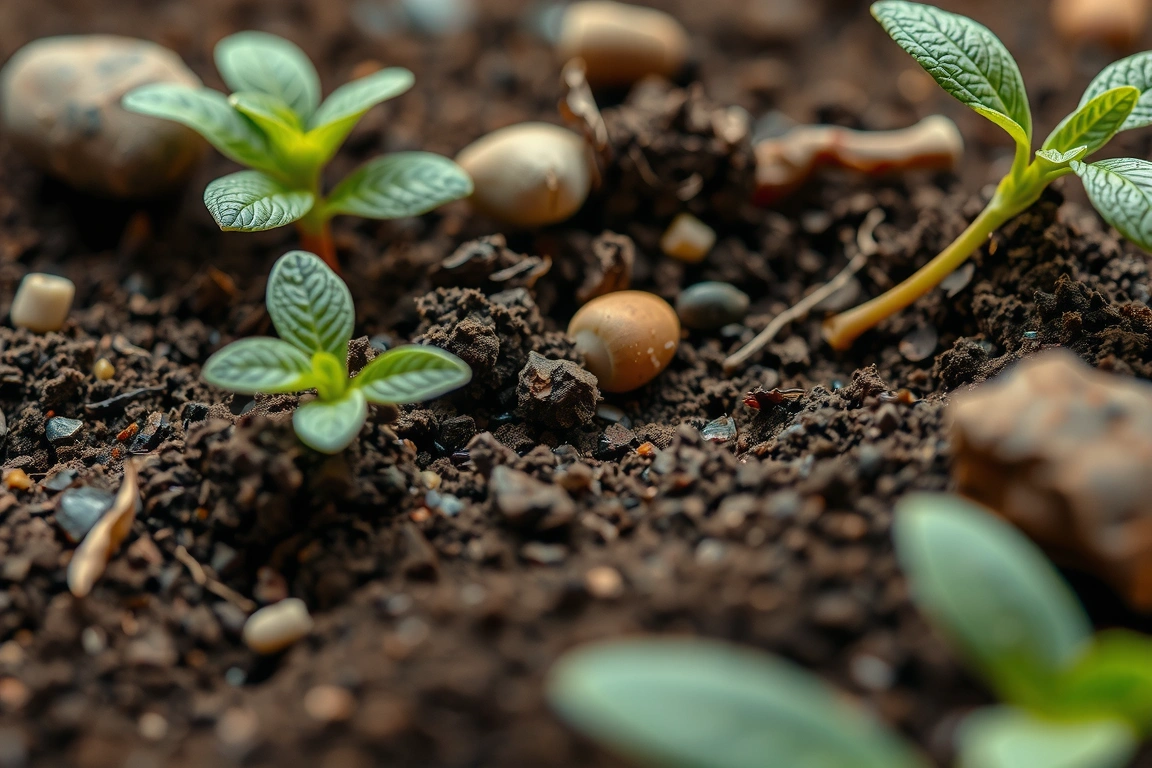
When you garden barefoot, you’re essentially plugging into this natural electrical field.
Designing Your Barefoot Gardening Routine
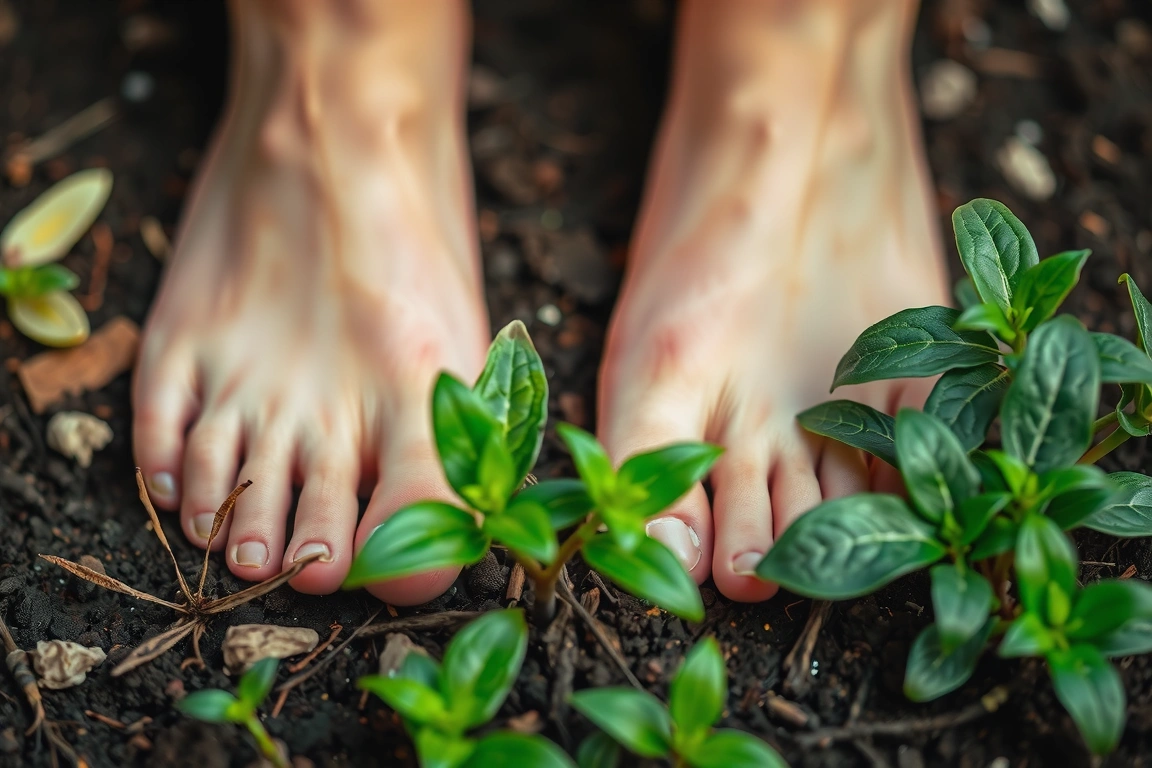
To effectively harness these benefits, your gardening session needs structure. Aim for at least 30-45 minutes of continuous barefoot contact with natural surfaces like soil, grass, or even damp concrete (avoid treated wood decks or asphalt, which insulate). The best time is often in the morning when dew can enhance conductivity, or after a light rain. I always keep a small spray bottle of water nearby to mist my feet and the soil around my work area if things get too dry; this simple trick can improve conductivity by over 80% according to voltage measurements. Wear clothing that allows you to move freely into stretches, like loose-fitting pants or shorts made from natural fibers like cotton or bamboo. The goal is to integrate movement with grounding, not treat them as separate activities.
Targeted Stretches for Lower Back Pain Relief
Gardening is a flexion-dominant activity—lots of bending forward—which can exacerbate lower back pain. These stretches, performed barefoot on the ground, are designed to counteract that strain and utilize your earthing connection.
Ground-Assisted Cat-Cow
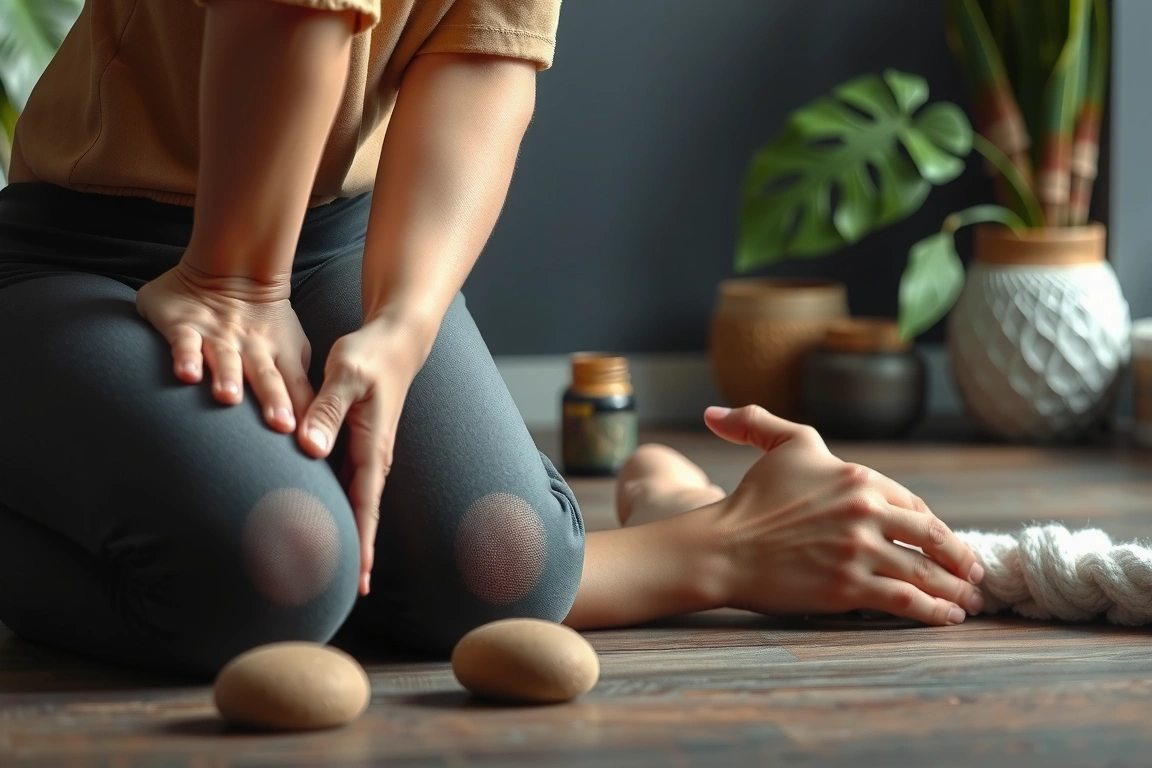
Start on your hands and knees, with palms and bare knees firmly planted in the soil. As you inhale, drop your belly and look up, arching your back (Cow pose). As you exhale, round your spine toward the sky and tuck your chin (Cat pose). The direct contact points—hands and knees—maximize skin surface area for electron transfer. Perform 8-10 slow, mindful repetitions. This mobilizes the spine and can help alleviate stiffness from being hunched over plants.
Earthed Child’s Pose
From your hands and knees, sit back onto your heels, allowing your forehead to rest gently on the earth. Extend your arms forward, palms down. Feel the connection through your forehead, hands, shins, and feet. Hold for 60-90 seconds, focusing on deep diaphragmatic breathing. This posture provides a gentle traction for the lumbar spine and is deeply calming for the nervous system, combining the benefits of grounding with a classic restorative stretch.
Standing Forward Fold with Grounded Heel Lift
Stand barefoot on the soil. Hinge at your hips and fold forward, letting your head hang heavy. Bend your knees slightly to protect the hamstrings. Then, gently lift your heels off the ground, balancing on the balls of your feet and your toes for 15-20 seconds before lowering. This engages the plantar fascia and calf muscles, important stabilizers often neglected during gardening, and increases the electrical potential difference between your body and the ground.
Then, gently lift your heels off the ground, balancing on the balls of your feet and your toes for 15-20 seconds before lowering.
Integrating Movement and Mindfulness
Gardening itself is the main event. The key is to be mindful of your posture and leverage the grounding effect throughout. When kneeling to plant, ensure both knees are directly on the earth, not on a pad (unless it’s a conductive earthing mat). When weeding, alternate between a squat (which strengthens the glutes and core) and a lunge position, ensuring one foot maintains full contact. I use a timer on my phone for 15-minute intervals; when it goes off, I pause for a 2-minute micro-stretch, like the earthed child’s pose, before continuing. This breaks up the repetitive motion and reinforces the connection.
Essential Gear for the Grounded Gardener
While going completely barefoot is ideal, it’s not always practical. For those with sensitive feet or who garden in areas with sharp debris, minimal, conductive footwear is a must. The goal is to maximize skin-to-earth contact or use a material that doesn’t block the flow of electrons.
- Xero Shoes Prio (≈$89.99): These are my daily drivers for gardening. They feature a 5.5 mm FeelTrue® rubber sole that is flexible enough to allow your foot to move naturally and feel the ground, while still offering protection. The wide toe box is excellent for stability.
- Vivobarefoot Primus Lite III (≈$145): A more premium option with a ultra-thin 3 mm sole and a puncture-resistant layer. They are designed for a truly “barefoot” feel and are highly flexible.
- Earth Runners Circadian
While the combination of grounding and targeted movement shows promise for reducing inflammation and pain, it’s crucial to acknowledge the limitations of the current research. Many studies, like the 2015 pilot study by Oschman et al. (n=44), have small sample sizes and often lack rigorous blinding protocols—it’s hard to blind someone to whether they’re standing on the earth or not. Most evidence is preliminary, showing correlation rather than definitively proving causation. The anti-inflammatory effects, while biologically plausible, need larger-scale, replicated clinical trials to be considered conclusive. Furthermore, earthing is not a substitute for medical treatment for chronic back conditions, severe inflammation, or acute injuries. Always consult a healthcare professional for persistent pain.
Verdict: A Practical and Promising Synergy
Combining barefoot gardening with intentional stretches isn’t a miracle cure, but it is a highly practical and low-risk strategy for potentially managing garden-induced inflammation and back pain. The existing science, though still developing, offers a plausible biological mechanism for why this works. By deliberately designing your gardening routine to include both prolonged soil contact and specific counter-stretches, you’re leveraging natural, accessible tools to support your body’s recovery. It transforms the activity from a potential source of strain into a holistic wellness practice. The most compelling evidence might just be how you feel afterward—less stiff, more relaxed, and more connected to your environment.
Small changes, real momentum
Get practical guides and templates you’ll actually use — a few thoughtful emails a month.
Sources & further reading
- YouTube — Wikipédia (fr.wikipedia.org)
FAQ
Can I get the same benefits gardening on a wooden deck?
No, you likely cannot. Wood, especially when sealed or painted, is an effective insulator that blocks the transfer of electrons from the Earth. For effective earthing, you need direct contact with a conductive surface like soil, grass, sand, or untreated concrete. If you must garden on a deck, consider using a conductive earthing mat (like the Earthing® Universal Mat, ≈$69.00) placed on the deck and placing your bare feet on it while you work.
How long does it take to feel the anti-inflammatory effects?
This varies greatly by individual. Some people report feeling a sense of calm and reduced achiness after a single 30-minute session. For more measurable reductions in inflammation markers or chronic pain, consistent practice is key. Most research studies observe significant changes after several weeks of daily grounding, suggesting that making barefoot gardening a regular part of your routine will yield the best results.
What if the soil in my area is contaminated?
This is a valid concern, especially in urban environments. Always visually inspect your garden soil for debris like glass or metal shards. If you have reason to believe your soil has chemical contaminants (e.g., from past industrial use), get it tested before gardening barefoot. In such cases, using a high-quality, conductive minimalist shoe like Vivobarefoots provides a protective barrier while still allowing for a ground-like experience, though the electron transfer may be slightly diminished compared to direct skin contact.
💚 Our Recommendation
Editor’s Pick: Try minimalist barefoot shoes for natural support.
Feel More Grounded
Simple, evidence-friendly practices for calm and wellbeing.